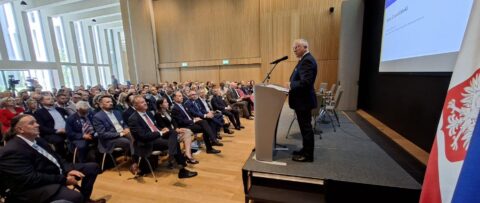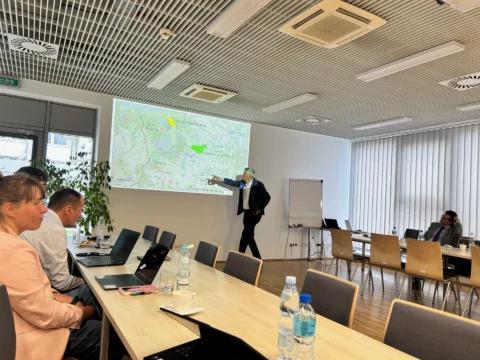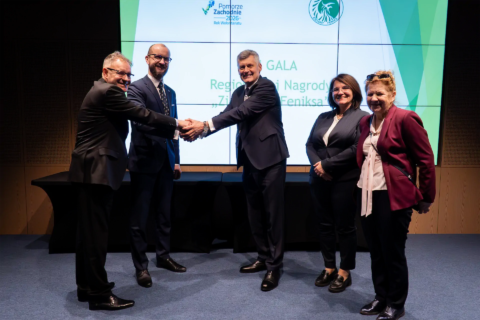
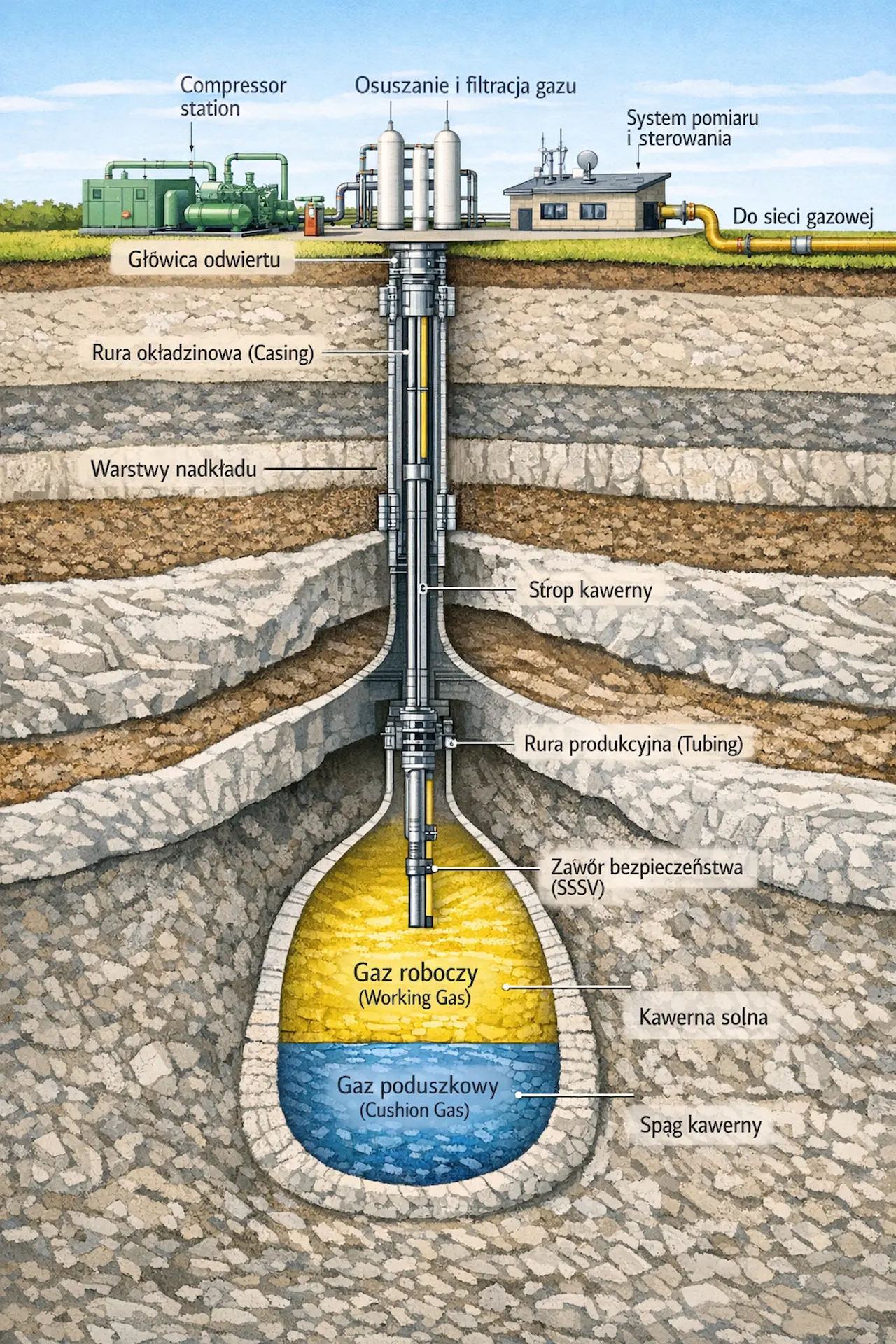
On February 18, 2026, the companies EcoEnergyH2 Sp. z o. o. with its registered office in Świnoujście and OŚRODEK BADAWCZO-ROZWOJOWY GÓRNICTWA SUROWCÓW CHEMICZNYCH "CHEMKOP" Sp. z o. o. with its registered office in Kraków (www.chemkop.pl). signed a LETTER OF INTENT TO COOPERATE, expressing the readiness of the Parties to cooperate in order to take joint actions aimed at utilizing the synergies of the Parties in the implementation of the project carried out by EcoEnergyH2 in the West Pomeranian Voivodeship, especially in the technological area of underground tankless storage of substances (e.g. hydrogen, natural gas, crude oil) located in rock salt deposits, i.e. in the exploration of salt deposits and carrying out the leaching process of salt caverns.
CHEMPOP is, among others:
- leading Polish designer of underground cavern storage facilities and borehole salt mines;
- provides innovative solutions in the area of underground storage in salt caverns and borehole exploitation of salt deposits;
- participates in the development of new technologies in the field of low-emission and zero-emission energy, in particular in the field of hydrogen storage in salt caverns;
- provides services in the areas of:
- underground storage of natural gas and other gases and liquid hydrocarbons in salt caverns,
- mining and salt leaching; drilling,
- specialized computer software used in geology, hydrogeology, geomechanics;
- physicochemical studies of chemical rocks.
CHEMKOP also conducts research and development work related to underground hydrogen storage.
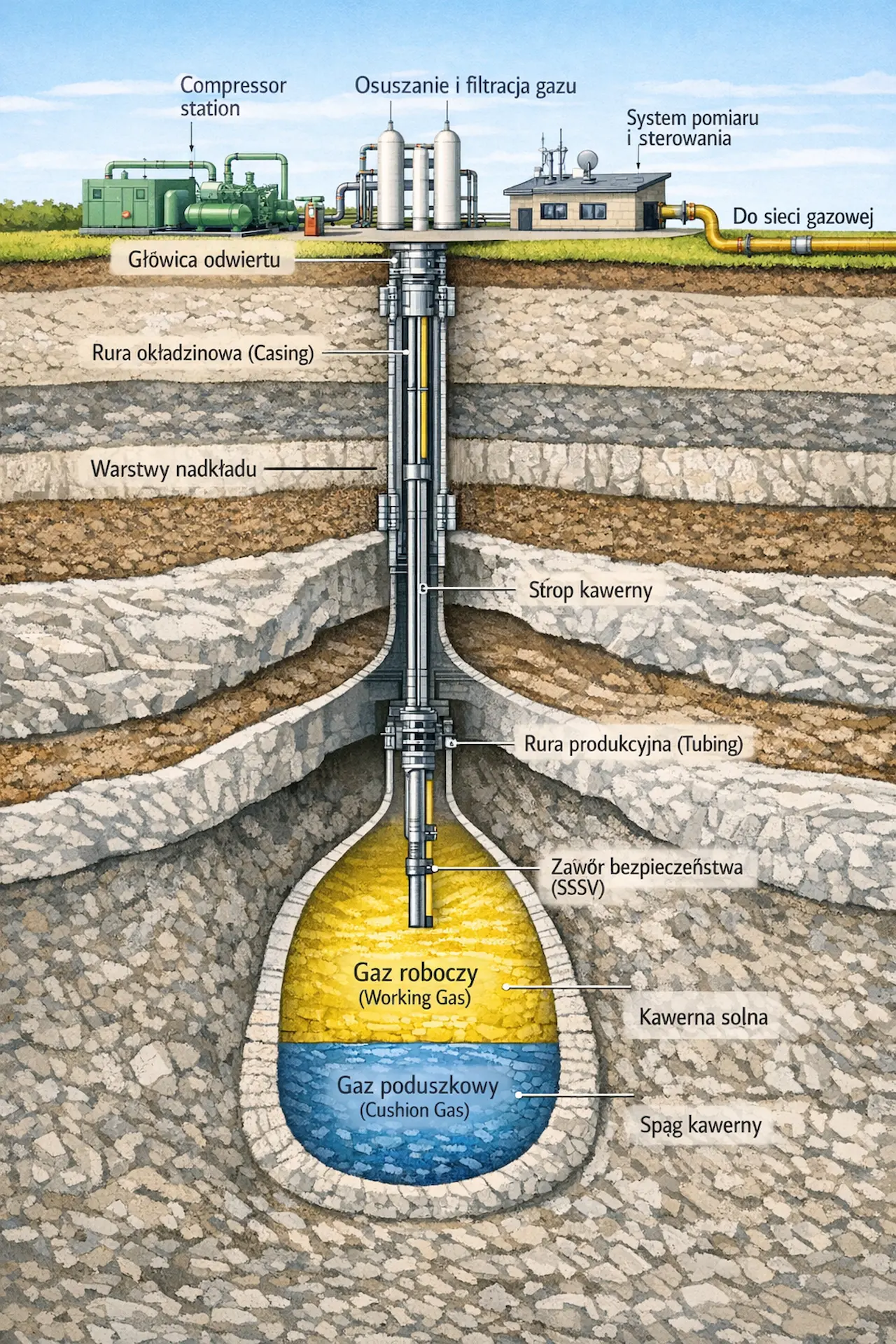
In connection with the publication of February 18, 2026 entitled: Poland may run out of gas storage space. Demand is growing rapidly., referring to the strategy published by Gas Storage Poland, a company belonging to the Gaz-System operator, for 2026-2030 with an outlook to 2035, which indicates that by 2030 there may be a deficit in gas storage capacity compared to market expectations and needs, and the reported demand for storage capacity from 2030 exceeds available capacities, as well as that the deficit will further increase due to the increase in the volume of mandatory reserves – from 1.3 billion m³ currently to 1.8-2.0 billion m³ after 2030. A significant demand for flexible services offered by cavern storage facilities should be assumed, as the forecasted market demand for capacity in these installations significantly exceeds available capacities, and after 2030 the deficit may reach even 1.6 billion m³.
An additional significant advantage of cavern storage installations is that they provide flexibility and maximum usability for the system, as well as the possibility of future conversion to alternative energy carriers.
Therefore, taking into account the above analysis of the Polish warehouse market, the signed Letter of Intent provides the basis for using the synergy necessary to define and assess today's possible area of cooperation and to develop a joint multi-year project, taking into account the use of scientific and technological competence resources of Polish contracting companies, with the indication and direction of the project's potential towards its natural target beneficiary.